
In only six years, this post already reads like a time capsule. It’s sprinkled with tidbits that friends I’ve made since 2020 might be interested in. For this and other reasons, it deserves another airing. I’ve deleted only the closing section that lists posts to be reincarnated in my Christian Individualism: The Maverick Biblical Workmanship of Otis Q. Sellers.—A.G.F.
 Last December 15th [i.e., 2029], in Birdland, 1949-1965: Hard Bop Mecca, I marked the 70th anniversary of the opening of that legendary Jazz club on Manhattan’s Broadway off 52nd Street. Over the weekend, I wondered what else was going on that year, but not the trivia one can learn from Wikipedia, such as:
-
- President Harry S. Truman’s inauguration in January
- Astronomer Fred Hoyle’s coining of “big bang” (a term of disparagement) in March
- Hamlet’s Best Picture Oscar win later that month
- The opening of Arthur Miller’s Death of a Salesman in February at the Morosco (six blocks south of Birdland’s near-future site)
- The Soviet Union’s successful A-bomb test in August and Truman’s sharing that news a month later
- Twin Communist victories: the proclamation of the People’s Republic of China on the first of October and of the German Democratic Republic a week later.
World War Two was in the rearview mirror. but the Cold War with its threat of mutually assured nuclear destruction was straight ahead.
No, I was remembering what writers who influenced me over the past fifty years were doing in 1949. Most of the embedded links below will take you to posts that elaborate upon that influence.

In 1949 Communist Herbert Aptheker, a 34-year-old World War II veteran and a Columbia University Ph.D. (and my future comrade, friend, and employer), was compiling material for his A Documentary History of the Negro People in the United States, whose first volume came out in 1951. (The series would grow to seven.) In April, Aptheker received W. E. B. Du Bois’s letter in reply to Aptheker’s request that he testify for the defense at the Foley Square trial of Communist Party leaders. The trial had begun in January; Aptheker himself testified on August 19th.[1]

Du Bois’s letter shows the address from which he sent it: 23 West 26th Street in Manhattan, originally a John Jacob Astor townhouse, built in 1881. In 1924 Astor’s son Vincent “sold the building for $30,000 to Frederick Vanderbilt Field [1905-2000]”—yes, those Vanderbilts—“a Communist who wrote for the Daily Worker published by Political Affairs Publishers, Inc.”[2]

The New York State Communist Party expressed interest in buying the building from Field in 1957. This was six years before Du Bois joined the Party. In 1949, however, Du Bois, Paul Robeson, Alphaeus Hunton, and Max Yergen had been meeting there since 1942 as officers of the Council on African Affairs, a Field-funded operation. In 1950 Du Bois ran for U.S. Senate on the American Labor Party ticket (the New York incarnation of the national Progressive Party). Field’s 1983 autobiography, From Left to Right (New York: Lawrence Hill), is a good read.

The month Birdland opened, C. L. R. James slammed Herbert Aptheker’s work in African-American history.[3] But Aptheker the Stalinist wouldn’t give James, the author of The Black Jacobins and Trotskyist scholar, the time of day, let alone answer his criticisms. Aptheker had more in common with James, a fellow Marxist-Leninist, than with Arthur Schlesinger, Jr., whom Aptheker preferred to debate. Schlesinger, historian of American liberalism, sparred with Aptheker at Harvard University about the Cold War and “The Vital Center” (the title of Schlesinger’s just-published book).[4]
Genuine believers in free institutions must be anti-Communists, Arthur M. Schlesinger, Jr. ‘38, associate professor of History, said last night at a John Reed Club debate which overflowed Emerson D. Opposing Schlesinger in the discussion, entitled “The Center and the Left,” Herbert Aptheker, associate editor of Masses and Mainstream, charged that the “vital center” of which Schlesinger is a proponent, “only maintains what exists, namely monopoly capitalism.” He called for a unity among all non-conservatives “so that a war against Fascism and capitalism can and must be successful.”[5]
Left totalitarians love to smear their opponents as “fascists,” don’t they.

Murray Rothbard’s first publication, a review of A Mencken Chrestomathy, appeared in Analysis, August 1949.[6] The author, who became my friend when he was 58, was then all of 23. Earlier that year he heard Ludwig von Mises was going to lead a seminar at New York University in the fall. Murray was already a defender of free markets, but not yet a Misesian. Human Action, the expansion and translation of Mises’s Nationalökonomie, was published that October, intellectually converted the young man.
I was scarcely familiar with Mises’s name, outside of the usual distorted story of the socialist calculation debate, and was therefore surprised to learn in the spring of 1949 that Mises was going to begin a regular seminar at NYU [New York University]. I was also told that Mises was going to publish a magnum opus in the fall. “Oh,” I asked, “what’s the book about?” “About everything,” they replied. Human Action was indeed about everything. The book was a revelation to those of us drenched in modern economics; it solved all problems and inconsistencies that I had sensed in economic theory, and it provided an entirely new and superb structure of correct economic methodology and theory. Furthermore, it provided eager libertarians with a policy of uncompromising laissez-faire; in contrast to all other free market economists of that day or later, there were no escape hatches, no giving the case away with “of course, the government must break up monopolies,” or “of course, the government must provide and regulate the money supply.”[7]

In February of 1949 the New York Times published “Should Communists be permitted to teach?” by Aptheker’s nemesis (and future NYU philosophy professor of mine), Sidney Hook, whose writings served as a halfway house for me as I broke with Stalinism in the mid-‘70s. (A few years ago, I applied Hook’s principles in “Is Herbert Aptheker a Historian? Can a communist tell the truth?”), now the fourth chapter of my Herbert Aptheker: Studies in Willful Blindness.)

In March 1949, Hook and other anticommunist academics and cultural figures protested the Communist front operation that the Congress for Cultural Freedom, which met at the Waldorf Astoria in 1949 and 1950, revealed itself to be.[8] That year Hook also penned, among many other articles and reviews, a tribute to his mentor, John Dewey.[9]


In 1949 Bernard Lonergan, S.J., whose magnum opus I used to extricate myself from the rationalism of Brand Blanshard’s The Nature of Thought, began to present to small groups papers that would eventually become Insight, his “essay in aid self-appropriation” published in 1953. That year also saw the publication of the fourth and fifth installments in his series, “The Concept of Verbum in the Writings of St. Thomas Aquinas” in Theological Studies.[10] In 1983, when he was convalescing at the Campion Center (a Jesuit infirmary in Weston, Massachusetts), I spoke with him about Austrian economists. “Well, they’re deductivists. And you know what I think of deductivists.”

Lonergan was impressed with Susanne K. Langer’s Feeling and Form enough to cite it a couple of times in Insight. That’s how I learned of her work, and around 2008 I finally got around to marking up her Philosophy in a New Key: a Study in the Symbolism of Reason Rite and Art. For the first time, the arts were for me not just enjoyable, but also intelligible. First published in 1942, a mass market paperback edition hit the stands in 1949.
What could Langer, a materialist (or naturalist) in all but name, offer Lonergan a Transcendental Thomist? Monsignor Richard M. Liddy, who wrote his dissertation on Langer after studying under Lonergan in Rome, supplied an answer in “What Bernard Lonergan Learned from Susanne K. Langer.”[11]

In 1949 Eric Voegelin, another profound influence with whom I had a chance to speak (also in 1983, my annus mirabilis), published a paper on Plato’s Gorgias.[12] The publication of the first volume of his Order and History still lay seven years in the future.

In 1949 Will Durant was struggling to finish the fourth volume of The Story of Civilization. The Age of Faith, a five-year project, was taking six. From its inception, Ariel, Mrs. Durant, had been a partner in this enterprise; her name joined his on the covers of the series beginning with the seventh volume, The Age of Reason Begins.

A teenaged Medford Stanton Evans, a future conservative thought leader and author of, among many other writings, the myth-shattering Blacklisted by History: The Untold Story of Senator Joe McCarthy and His Fight against America’s Enemies, realized he was a man of the Right in 1949 after reading George Orwell’s 1984.  “It was about communism . . . I said: ‘Well, I’m against communism. What am I for?’” As for becoming a writer, “No, it never crossed my mind. I did not even think in that day and age about becoming a writer of any type. If I’d had my druthers in 1949, I would have played left field for the Brooklyn Dodgers.”

Otis Q. Sellers (1901-1992), an early influence, but one from whom I walked away to chase my intellectual lusts and to whom I’ve returned as a prodigal son, was testing his discovery of the premillennial Kingdom of God. He announced this in The Word of Truth, Volumes XI, 1949-1950 under the series entitled “The Order of Things to Come.” He’d develop this idea during the 1950s, but he was ready to present it publicly in that volume’s fifth issue, dated January 1950 and therefore written probably during the last weeks of 1949. Here’s a passage:
Many there are who believe that the next great event of prophecy is the rapture or catching away of all living believers, followed by the resurrection of the dead in Christ, this to be followed by the great tribulation upon the earth, the second coming of Christ, the millennial kingdom, then the new heavens and the new earth. This, in brief, is the position held by most dispensational fundamentalists, a position which we have often designated in these pages as the Darby-Scofield system of prophetic interpretation. However, it is my conviction that this system has failed to recognize those prophecies which reveal an aspect of the kingdom of heavens which precedes the millennial kingdom, and, therefore, precedes the second coming of Christ. This I call the premillennial kingdom of the heavens since it precedes the millennial kingdom.
I continue to appreciate the intellectual delights afforded by the scholars named above, especially those who, like Blanshard, had a literary gift. Compared to the joy of grasping Sellers’s insights into God’s Word, however, and reflecting upon the industry and integrity which he brought to his pursuit of that pearl of great price, those erstwhile pleasures pale. I no longer long for the fleshpots of academia.
Notes
[1] Here’s the letter. For a discussion of the trial, see Gary Murrell, “The Most Dangerous Communist in the United States”: A Biography of Herbert Aptheker, UMass Press, 2015, 76-77.
[2] “The Astor Offices at Nos. 21 and 23 West 26th Street,” The Daytonian, August 4, 2012.
[3] C. L. R. James [“J. Meyer”], “Herbert Aptheker’s Distortions,” Fourth International, Vol. 10, No. 11, December 1949. But see also C. L. R. James [“J. Meyer”], “Stalinism and Negro History,” Fourth International, Vol. 10, No. 10, November 1949.
[4] As Schlesinger recalled the event: “The ever reliable Herbert Aptheker denounced ‘The Schlesinger Fraud’ in the Communist monthly Masses & Mainstream as a program groomed to the needs of a ruling class seeking war and fascism.’ In 1949 Aptheker and I held a debate. Neither of us persuaded the other of anything.” A Life in the Twentieth Century: Innocent Beginnings, 1917-1950, Houghton Mifflin Harcourt, 2000, 519. The Aptheker article had appeared in the October 1949 issue of Masses & Mainstream and reprinted in a collection of Aptheker’s essays entitled The Era of McCarthyism, New York: Marzani & Munsell, 1955, 115-129.
[5] “Aptheker clashes with Schlesinger,” The Harvard Crimson, December 3, 1949. For discussion, see Murrell, 82-84.
[6] For Rothbard’s appreciation of analysis’s founder Frank Chodorov who gave Murray’s “fledgling work” a platform, see “Frank Chodorov, R. I. P.,” Left & Right: A Journal of Libertarian Thought, 1967; republished here. For Rothbard’s mature celebration of Mencken, see “H.L. Mencken: The Joyous Libertarian,” New Individualist Review, Vol. 2, No. 2, Summer 1962, pp. 15–27; republished here.
[7] Murray N. Rothbard, The Essential von Mises, Auburn, AL: The Ludwig von Mises Institute at Auburn University, 108. The link will take you to an expanded edition of an essay Rothbard wrote in 1973.
[8] Here’s the CIA’s overview: Origins of the Congress for Cultural Freedom, 1949-50. For the impact of this “peace conference” on a cultural giant caught in the political crossfire, see Terry Klefstad, “Shostakovich and the Peace Conference,” Music and Politics, Vol. 6, No. 2, Summer 2012, 1-21; and Phillip Deery, “Shostakovich, the Waldorf Conference and the Cold War,” American Communist History, Vol. 11, No. 2, 2012, 161-180.
[9] Sidney Hook, “John Dewey at Ninety: The Man and His Philosophy,” The New Leader, October 22, 1949, S-3, S-8.
 [10] The series was compiled into a book, edited by David B. Burrell, C.S.C.: Verbum: Word and Idea in Aquinas, University of Notre Dame Press, 1967.
[11] Lonergan Workshop, Vol. 11, 1995, 53-90. I posted the text of this article on my older site. It’s a good introduction to both thinkers.
[12] Eric Voegelin, “The Philosophy of Existence: Plato’s Gorgias,” The Review of Politics, Vol. 11, No. 4, October 1949, 477-498.
[13] Video and transcript of “The Theme is Freedom: Religion, Politics, and the American Tradition,” Booknotes (C-SPAN) interview of M. Stanton Evans, February 5, 1995.
[14] “The Premillennial Kin
 “Not enough for what?” To philosophize aright. I swiped this post’s title from a collection of essays by critics of the philosophical school of linguistic analysis that dominated 20th-century academic philosophy.


 Last December 15th in
  Before launching this site in October 2018, I put a tagline under my name in the masthead. At first, it referred rather boringly to the half-century of retrospective I wanted to set down here. I eventually changed it to “Navigating this dispensation’s last days” and cited a couple of Biblical verses to justify the reference to “dispensation.”


 The other subject of Schultz’s study, Susanne Langer (1895-1985), the German-American philosopher whose thought was shaped to a large degree by her early absorption of Cassirer’s writings in the original as they were published, contributed an essay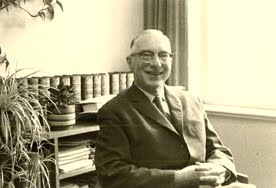

 In the discourse we call philosophy, noncognitive interests are in play, interests that compete with, threaten to interfere with if not overwhelm the interest in knowing the truth. Brand Blanshard—the one member of my pantheon of former philosophical heroes whom I could have met, but now regret never having exerted myself to do so—acknowledged their efficacy: