
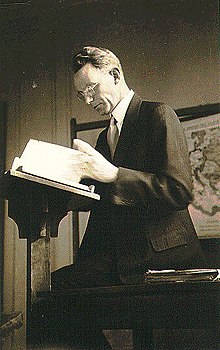
John Emerich Edward Dalberg Acton (1834-1902), Catholic historian in Victorian England and thorn in Pio Nono‘s side (to whom he nevertheless dutifully submitted when he could do no other) was born 185 years ago today.
As the Enlightenment’s embers flicker out I continue to engage his writings for their style as well as substance. Below are quotes (including the aphorism “everyone knows”) culled from Roland Hill, Lord Acton, Yale University Press, 2000.
Here are links to my review of Lazarski’s Power Tends to Corrupt and my essay on the limitations of Acton’s liberalism from a dozen years ago.
On Liberty
By liberty I mean the assurance that every man shall be protected in doing what he believes his duty against the influence of authority and majorities. The State is competent to assign duties and draw the line between good and evil only in its immediate sphere. . . . In ancient times the State absorbed authorities not it own, and intruded on the domain of personal freedom. In the Middle Ages it possessed too little authority, and suffered others to intrude. Modern States fall habitually into both excesses. The most certain test by which we judge whether a country is really free is the amount of security enjoyed by minorities. Liberty, by this definition, is the essential condition and guardian of religion; and it is in the history of the Chosen People, accordingly, that the first illustrations of my subject are obtained. The government of the Israelites was a Federation, held together by no political authority, but by the unity of race and faith, and founded, not on physical force, but on a voluntary covenant. (278) Continue reading “Happy Birthday, Lord Acton!”
 It was after Sunday Mass at St. Agnes. Finishing breakfast with friends in a 42nd Street a coffee shop, I excused myself to call (using a 20th-century pay phone) my wife who, enduring a cold, couldn’t join me in Manhattan that wintry day.
 By the time my
  I met him for first time at the
  Retiring Representative Luis Gutierrez (D-Ill.) recently
 That is, Ali provides what William Kirkpatrick calls the “smiley-faced version of Islam which emphasizes the commonalities with Catholicism and leaves out the scary parts.” (
 (third from the right; New Orleans lunch counter sit-in, September 9, 1960), I noticed in one of them his elaboration upon an inconvenient (for some) fact of Adolf Hitler’s political trajectory.
 The people turned out to say farewell. Hitler had returned to his Munich regiment, his only foothold, his only home. He was threatened with demobilization and a return to the hostel. A fellow soldier later remembered that Hitler seemed like a stray dog, searching for a new master. In the funeral procession for the Jewish Socialist Eisner was a detachment from Hitler’s regiment wearing both red armbands and black armbands. The film clip shows a lance corporal marching with the officers—Adolf Hitler.
 William Schultz commented on Blanshard’s assessment:
 and his interpreter
  wrote.