
Forty years ago an atheist drew a sound inference:
Working from the premise that an omniscient, infallible being exists and that this being has revealed a proposition to man, it is a short, logical—and uncontroversial—step to conclude that this proposition is worthy of belief. . . . If the proposition comes from an infallible, nondeceitful God, it cannot be false; therefore, it must be true. George Smith, Atheism: the Case against God, Buffalo, NY: Prometheus Books 1979, 172. New edition with a foreword by Lawrence M. Krauss 2016
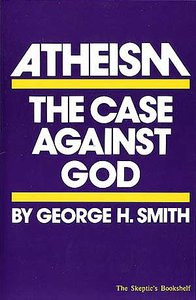 Since the ultimate ground for drawing inferences (including Smith’s) is the existence of the God of the Bible, I take every proposition I find in the Bible to be God-communicated and therefore worthy of belief. To the best of my ability I regiment my thinking in accordance with the information they convey from God’s mind to mine.
So I agree with Smith, not on his authority but on Jesus’:
Man shall not live by bread alone, but by every word that comes from the mouth of God. Matthew 4:4 (ESV)
That’s how it will be when God governs the Earth. (Jesus said “shall,” not merely “ought to.”) As Isaiah prophesied:
And your ears shall hear a word behind you, saying, “This is the way, walk in it,” when you turn to the right or when you turn to the left. Isaiah 30:21 (ESV)
Your kingdom come, your will be done on earth, as it is in heaven! Matthew 6:10 (ESV)
Going forward, I’ll be exploring what that regimentation means. My conclusions won’t please all visitors, even the friends among them. But since I’m morally certain that there are more grains in the bottom of my hour glass than the top, people-pleasing cannot be my priority. Ephesians 6:6. Love the truth, I say, and let the chips fall where they may.

As for what Smith (and others) thought he achieved in that book: his metaphysics of “natural necessity,” epistemology of “reason,” and ethics of “life” (or “happiness”) jointly constituted the philosophy he adduced in support of what he called “critical atheism.” By its internal incoherence it disqualified itself from being a reasonable basis for affirming or denying anything. I exposed that incoherence thirty years ago. The curious among you may read an updated version of that exposé in Atheism Analyzed: The Implosion of George Smith’s “Case against God”, available as Kindle booklet.
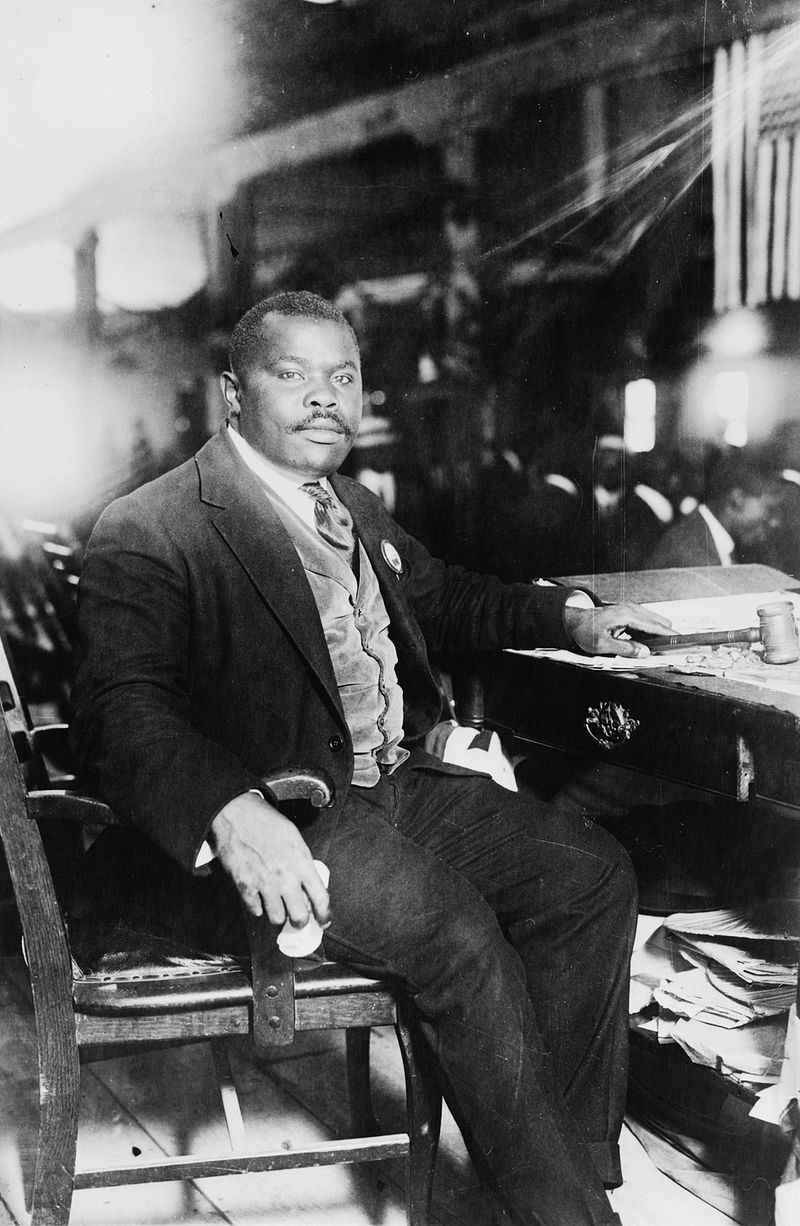 On August 13, 1920 Marcus Garvey presided at the convention of the United Negro Improvement Association held at Madison Square Garden in New York City. There he promulgated the
 A Catholic Challenge to Modern Atheism is the subtitle of

 The Apostle Paul speaks of “gnosis falsely so called” (1 Timothy 6:20). Why not also “philosophy falsely so called”? How would that differ from philosophy according to the elements of this world? (Colossians 2:8)
 In the discourse we call philosophy, noncognitive interests are in play, interests that compete with, threaten to interfere with if not overwhelm the interest in knowing the truth. Brand Blanshard—the one member of my pantheon of former philosophical heroes whom I could have met, but now regret never having exerted myself to do so—acknowledged their efficacy:
 Even if self-identifying “philosophers” disagree about proffered solutions, they would all agree (if asked) that such diversity, what Nicholas Rescher called the
  Bill Vallicella, the


 The new edition Josh McDowell’s

