
“No, I’m philosophizing Christianly.[1] Together, let’s uncover the worldview you’re defending (wittingly or otherwise).”
When an epistemologically self-conscious Christian makes a point that discomfits someone who’s not epistemologically self-conscious, it’s not long before the latter questions the former’s motive. “You’re not interested in the truth of the matter; you’re trying to sign me up for something, you special pleader you!” Since the Christian’s motive is not neutral, they suggest, it’s not pure. It’s suspect.
Christians who engage in apologetics are philosophizing—they’re pursuing wisdom at the highest level of generality—but they do so in dialogue with unbelievers (or inconsistent believers). The apologist may, if it’s called for, employ the analytical tools on display in articles published in peer-reviewed journals labeled “philosophical.”
Qua apologist, however, he is not necessarily trying to negotiate the conceptual terrain at the highest level of analytical exactitude. That is partly because the latter is not necessary for the apologist’s task, which is to present the excellent message or “news” (εὐαγγέλιον, evangelion) of Jesus Christ and demolish the objections to it, if any, that his auditor may throw back at him.
There’s a time and place for analytical depth and scholarly excellence, but the motive of apologetic theoria is to be found in polemical give-and-take of apologetic praxis. The Christian “lover of wisdom” (for whom Christ is the Wisdom of God) does not do apologetics “for its own sake” or to impress his fellows in the common room. He’s trying to get the other guy to recognize his need for peace with God and hopes God will use his (the apologist’s) effort to remove obstacles to that recognition. God has, of course, already ordained the outcome; it’s a discovery process for both parties. Continue reading ““I’m doing philosophy; you’re doing apologetics!””
 Last week
  People who find Bernard Lonergan’s writing forbidding might benefit from this review of his magisterial Insight: A Study of Human Understanding, the subject of
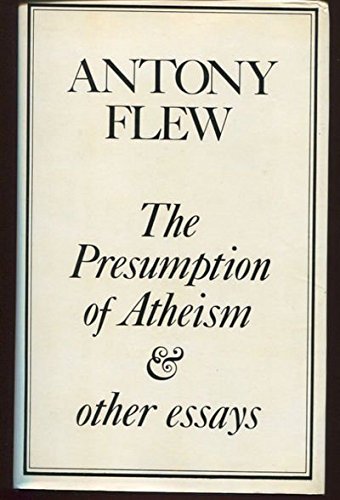 suspend their commitments. An example of this is the “presumption of atheism” that the late atheist-turned-deist Antony Flew (not to be confused with Anthony Flood) defended: like the presumption of innocence, the “presumption of atheism” may be defeated, but only by a sound argument for biblical theism that does not presuppose that biblical theism is true.


 This continues a series of posts in which I engage Maverick Philosopher
  This continues the series in which I discuss Maverick Philosopher